A freight job can be completed on time and still fail to deliver the expected financial result.
The shipment may reach the customer as planned, but an outdated rate could have been used in the quotation. An additional handling charge may not appear on the invoice. A supplier cost might be recorded only after the job is closed. By the time finance identifies the difference, the expected margin has already slipped.
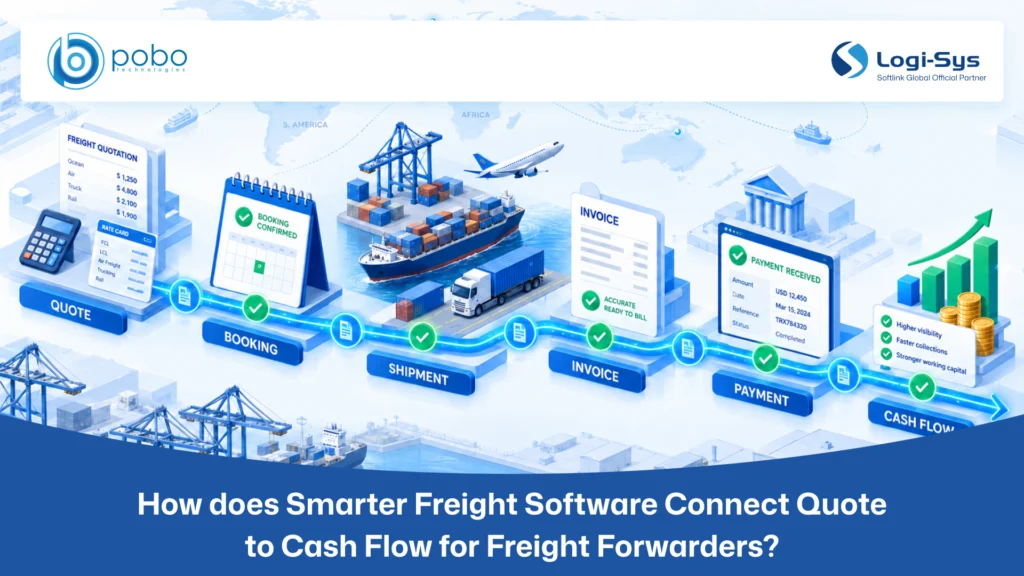
This is why freight forwarders need more than just software to create bookings and documents. They need a connected system that carries accurate commercial and operational information from the first customer inquiry through shipment execution, invoicing, payment collection, and profitability review.
Logi-Sys supports this quote-to-cash journey by connecting sales, freight operations, billing, and financial accounting through one logistics-focused cloud ERP.
Financial Control Starts with the Quote
Every freight job begins with a commercial promise.
The customer shares the cargo details, origin, destination, transport mode, service requirements, and expected timeline. The sales team must then review carrier rates, agent costs, surcharges, taxes, and local service charges before preparing a quotation.
When this process depends on spreadsheets and email trails, teams may use outdated rates, overlook charges, or send quotations without understanding the likely margin. Delayed responses can also reduce the chance of winning time-sensitive business.
Logi-Sys supports inquiries, opportunities, tariffs, rates, quotations, follow-ups, and sales reporting. Sales teams can manage the commercial process in a more organized way rather than searching across separate files.
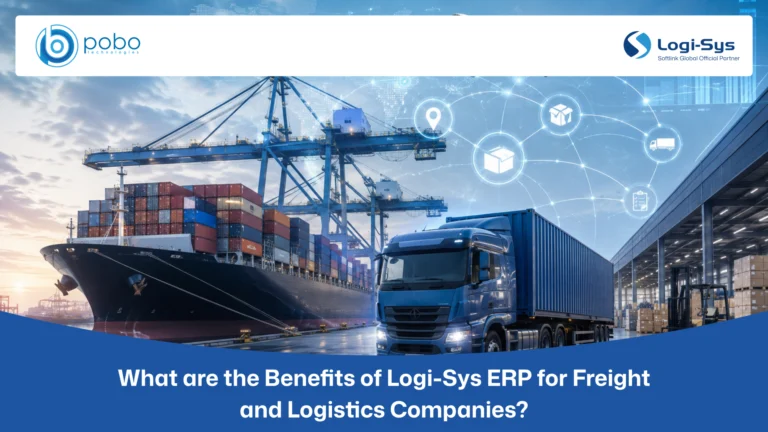
Beyond the quote-to-cash workflow, the advantages of Logi-Sys ERP include reduced manual work, stronger shipment visibility, better financial control, and connected reporting across logistics operations.
A Controlled Handoff from Sales to Operations
The move from an accepted quotation to an active freight job is a critical part of the process.
In a disconnected setup, sales may send the booking details through email. Operations then recreates the customer, routing, service, and charge information in another system. Even a small difference between the quotation and the operational job can later affect service delivery, documentation, billing, or profitability.
Logi-Sys connects sales information with freight operations so the shipment can continue through a more controlled workflow.
Air freight teams can manage bookings, AWBs, HAWBs, flight schedules, direct shipments, back-to-back shipments, and consolidations. Ocean freight teams can manage BLs, HBLs, vessel schedules, containers, FCL and LCL shipments, and consolidation activities.
Authorized teams can work from information connected to the same freight job instead of creating a separate version of the shipment for every department.
Capturing Commercial Changes During Execution
Freight shipments rarely move exactly as originally planned.
Cargo may require additional storage, special handling, a revised route, extra documentation, another delivery attempt, or unexpected transportation services. These operational changes often create new supplier costs and billable customer charges.
If the additional activity is recorded only in an email or personal spreadsheet, billing may never see it. The forwarder may then absorb a cost that should have been recovered from the customer.
Logi-Sys allows operational activities, expected costs, and applicable charges to remain connected to the freight job. This creates a clearer relationship between what happened during shipment execution and what should appear on the final invoice.
Customer service, operations, and finance can also refer to the same job when reviewing an exception. Teams spend less time searching for updates and more time resolving the underlying issue.
Billing Based on the Work Completed
Delivering the cargo does not complete the commercial cycle. Every billable service must still be converted into revenue.
When invoicing is handled separately from freight operations, finance teams may need to reconstruct the shipment using emails, rate sheets, and supporting documents. This delays billing and increases the possibility of missed or incorrect charges.
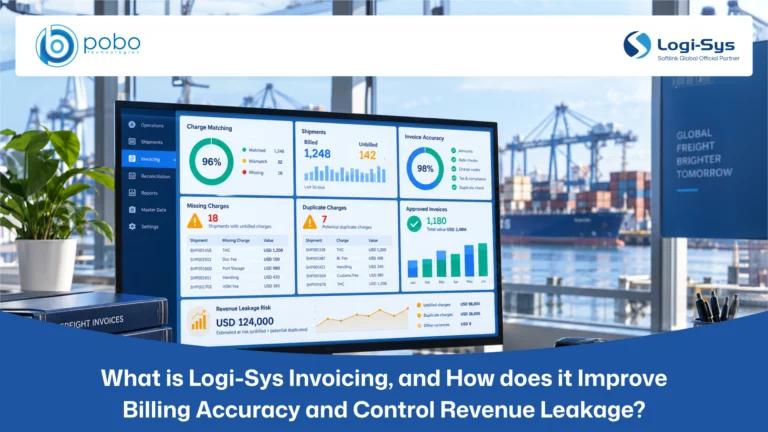
Logi-Sys connects invoicing with freight forwarding, customs, transportation, and warehouse activities. Billing teams can review the relevant shipment and charges before preparing the customer invoice.
The system supports direct invoice posting from operations, multiple currencies, different bill types, debit and credit notes, taxation requirements, configurable invoice formats, billing registers, and unbilled-job reports.
Unbilled-job reporting helps finance teams identify completed services that have not yet been invoiced. This can reduce the delay between service completion and invoice generation while helping the business identify potential revenue leakage.
Accurate billing still depends on users recording, reviewing, and approving the correct charges. The advantage is that the system provides a more controlled path from operational activity to customer invoicing.
Protecting Margin Before Closing the Job
A customer invoice confirms the revenue earned, but it does not reveal whether the job was profitable.
Carrier invoices, agent charges, transportation expenses, warehouse costs, and other supplier bills may arrive at different times. If the job is closed before these costs are recorded, the margin can appear stronger than it really is.
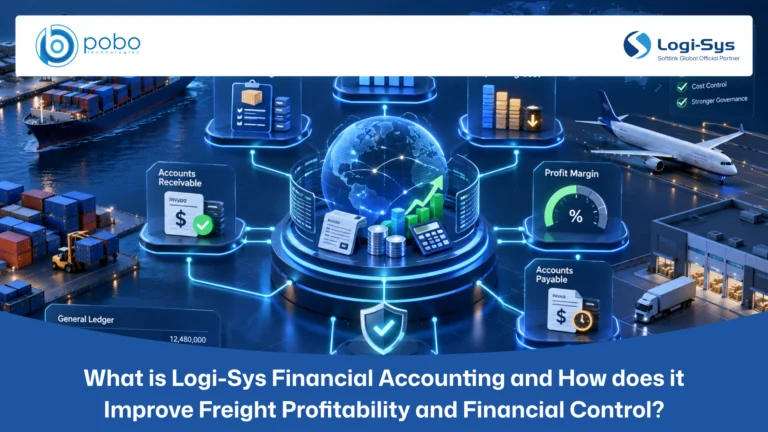
Logi-Sys connects financial entries to the relevant shipment, customer, branch, charge, currency, and operational event. Finance teams can manage receivables, payables, work in progress, accruals, revenue recognition, credit limits, and collections through the connected environment.
Expected expenses can be recorded while final supplier invoices are pending. When the actual bills arrive, finance can compare them with the estimated costs and investigate major differences.
Management can then compare quoted revenue with invoiced revenue, expected costs with actual costs, and the planned margin with the final job result.
Connecting Invoicing with Payment Collection
The quote-to-cash process does not end when the invoice is sent. It ends when the customer’s payment is collected and correctly recorded.
Late payments can weaken cash flow even when shipment volumes and reported revenue appear healthy. Finance teams need visibility into outstanding invoices, credit limits, aging, receipts, collections, and overdue balances.
Logi-Sys supports receivables monitoring, credit control, and bank and cash management. Because financial information remains connected to the underlying customer and freight transaction, finance teams have better context when reviewing an outstanding amount.
If a customer disputes an invoice, the team can review the job, services, charges, and related records without searching across disconnected systems. Quicker clarification can support faster dispute resolution and payment collection.
Seeing the Complete Commercial Performance
A connected quote-to-cash process gives management more than a shipment-status report.
Decision-makers can examine which quotations convert into jobs, which completed services remain unbilled, where actual costs exceed estimates, which customers have overdue invoices, and which shipments produce sustainable margins.
This helps management move beyond basic revenue and shipment-volume reporting. They can review the complete commercial journey and identify where value is being gained or lost.
These insights can support better pricing, tighter cost controls, stronger customer-account management, and more consistent job-closing practices.
Building the Right Workflow in Logi-Sys
Software alone cannot correct an unclear business process.
Freight forwarders must define rate ownership, quotation approvals, charge codes, expected-cost rules, billing triggers, credit limits, job-closing procedures, and user responsibilities. Tax settings, currencies, invoice formats, reports, and external integrations must also reflect the company’s actual operations.
A certified Logi-Sys service partner can analyze the existing process, identify gaps between sales, operations, and finance, configure appropriate controls, test real shipment scenarios, and provide role-based user training.
Conclusion
Smarter freight software connects more than individual tasks. It connects the original customer quotation with shipment execution, customer billing, supplier costs, payment collection, and final job profitability.
Logi-Sys helps freight forwarders maintain this connection throughout the quote-to-cash journey. Its value comes from giving sales, operations, billing, and finance a shared process built around the same freight transaction. We help freight forwarders configure, integrate, support, and optimize Logi-Sys around their operational and financial workflows.
Ready to connect your freight quotations, operations, billing, and collections? Schedule a consultation with POBO Technologies to discuss your requirements.