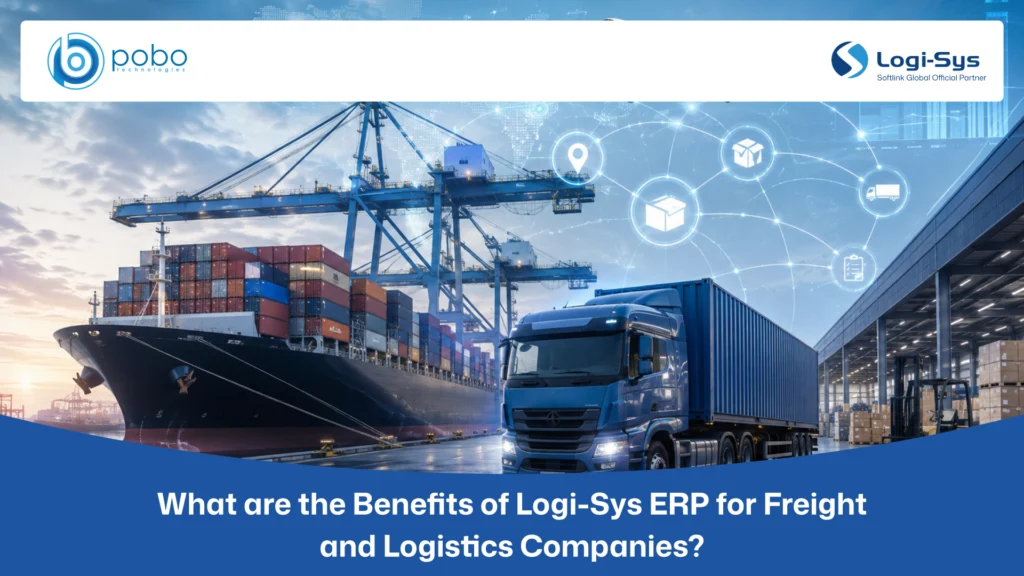
Freight and logistics companies manage a continuous flow of quotations, shipments, documents, customer updates, charges, and financial transactions. When this information is spread across separate systems and spreadsheets, teams may face repeated data entry, delayed communication, missed billing, and limited operational visibility.
Logi-Sys ERP brings these activities together through a cloud-based platform developed for freight forwarders and logistics service providers. It connects freight operations with customer service, sales, invoicing, accounting, and reporting. This helps teams coordinate their work, improve process control, and make decisions using more consistent business information.
Connected Freight and Business Operations
A shipment may involve sales, freight operations, documentation, customs clearance, transportation, warehousing, customer service, billing, and accounting. When these functions operate separately, employees must repeatedly transfer the same information between departments.
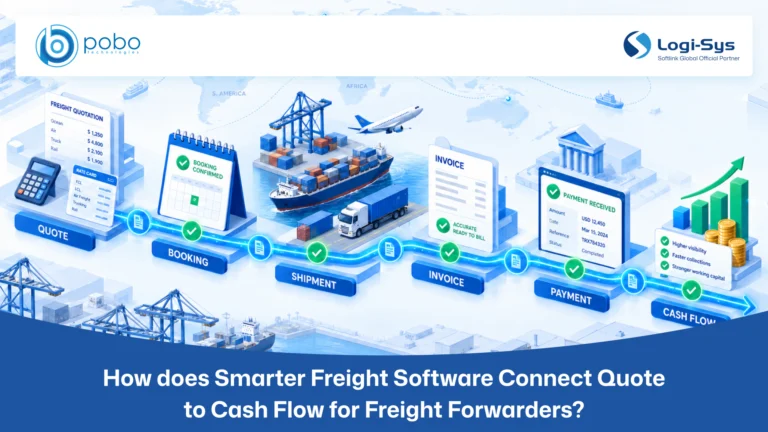
Logi-Sys creates a connected environment where relevant information can support different stages of the shipment lifecycle. Customer and quotation details can support job creation. Shipment information can be used for documentation and customs activities. Operational charges can support invoicing, while revenue and supplier costs remain associated with the same job.
This gives authorized teams a clearer view of each shipment and reduces their dependence on emails, spreadsheets, and disconnected records.
Greater Operational Efficiency
Repeatedly entering customer names, routes, carrier details, milestones, documents, and charges takes time and increases the risk of errors.
Logi-Sys connects freight forwarding, customs, transportation, warehousing, invoicing, and accounting workflows. Information recorded during one stage can support the activities that follow, depending on the system configuration.
Automated notifications can alert users when action is required. Standardized workflows help teams follow consistent procedures, while EDI and other integrations can reduce manual information exchange with connected logistics partners and systems.
Employees can spend less time transferring information and more time managing shipments, exceptions, and customer requirements.
Improved Customer Service and Shipment Visibility
Customers expect accurate shipment information without repeatedly contacting their freight forwarder. They want to know where their cargo is, whether important milestones have been completed, and whether any action is required.
Logi-Sys gives customer service teams access to booking details, milestones, documents, invoices, and operational updates. Employees can respond to inquiries without collecting information from several departments.
The LogiTRACK customer portal extends this visibility to authorized customers, consignees, agents, and overseas offices. Users can track shipments, review milestones, retrieve documents, access invoices, view outstanding statements, submit bookings, and receive status alerts.
Customer self-service can reduce routine shipment-status inquiries, save staff time, and create a more transparent customer experience.
Stronger Sales and Customer Management
Freight sales teams handle inquiries, rates, quotations, meetings, and follow-ups. When these activities remain in personal spreadsheets or individual inboxes, managers have limited visibility into the sales pipeline.
The Logi-Sys Sales and CRM module supports lead and opportunity management, tariffs, quotations, sales activities, campaigns, budgets, and salesperson performance reporting.
Managers can identify opportunities requiring attention and understand which inquiries are moving toward conversion. Relevant customer, quotation, service, and rate information can also support the operational workflow, depending on how Logi-Sys is configured.
The system does not generate sales by itself. However, it gives teams a more organized process for managing opportunities, customer relationships, and the transition from quotation to shipment execution.
Better Billing and Revenue Control
A shipment may be operationally complete while some services are still waiting to be billed. Additional handling, storage, documentation, transportation, or customs charges can be overlooked when billing depends on emails and spreadsheets.
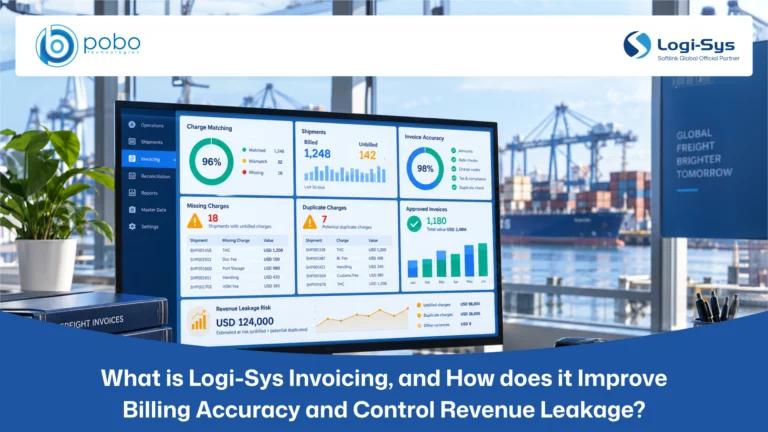
The Logi-Sys Invoicing module connects billing with freight forwarding, customs, transportation, and warehouse activities. Billing teams can review applicable charges against the job before preparing the customer invoice.
Unbilled-job reports help finance teams identify completed services that have not yet been invoiced. The system also supports direct posting from operations, multiple currencies, different bill types, debit and credit notes, taxation requirements, and configurable invoice formats.
This creates a clearer connection between services performed and revenue billed, helping companies improve billing completeness and identify potential revenue leakage.
Clearer Cost and Shipment Profitability
Revenue alone does not show whether a shipment was financially successful. Companies must also account for carrier charges, agent fees, transportation expenses, warehouse costs, taxes, and other supplier charges.
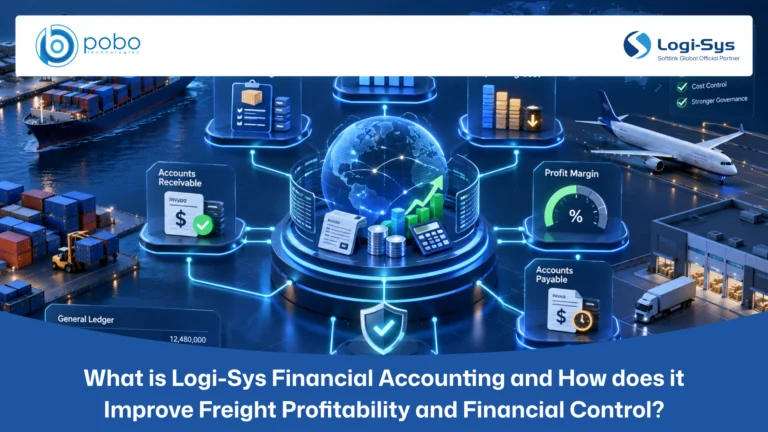
The Logi-Sys Financial Accounting module connects financial transactions with the relevant shipment, customer, branch, service, and currency. Revenue, supplier expenses, receivables, payables, work in progress, and accruals can remain associated with the job.
Finance teams can compare quoted revenue with invoiced revenue, expected costs with actual costs, and estimated margins with final margins. If a job performs below expectations, management can investigate whether the cause was a missed charge, unexpected supplier expense, pricing error, currency difference, or operational exception.
These insights support better pricing, customer-account management, and cost-control decisions.
Faster Management Reporting
Freight companies generate large volumes of operational and financial data every day. That data provides limited value when management must wait for different departments to combine several spreadsheets.
Logi-Sys brings shipment, sales, billing, accounting, and customer information into a connected reporting environment. Managers can analyze shipment volumes, customer revenue, branch performance, outstanding receivables, unbilled jobs, service results, and trade-lane profitability.
LogiBRAIN extends these capabilities through customizable dashboards, KPI monitoring, drill-down analysis, predictive analytics, and AI-powered insights.
For example, if a branch generates higher revenue but weaker margins, management can investigate the customers, services, supplier costs, or trade lanes affecting the result. This turns operational data into useful information for faster decision-making.
Centralized Control and Accountability
Logi-Sys supports multi-company, multi-branch, and multi-currency operations through a connected cloud environment. Companies can establish consistent processes while applying suitable user roles, permissions, tax settings, financial controls, and reporting requirements.
The system also supports approval workflows, financial-period controls, and audit trails. These capabilities improve accountability and help businesses maintain more consistent operational and financial records as they add branches, users, customers, and shipment volumes.
How can Freight and Logistics Companies Get More Value from Logi-Sys?
The benefits of Logi-Sys depend on how effectively it is aligned with the company’s operations. Modules, workflows, charge structures, approvals, reports, and integrations must be configured carefully.
A successful setup requires process mapping, accurate data, configuration, integration, testing, user training, go-live support, and ongoing optimization. Without this foundation, employees may return to spreadsheets and manual workarounds outside the ERP.
Conclusion
Logi-Sys ERP gives freight and logistics companies a connected platform for managing operations, customer service, sales, invoicing, accounting, and reporting.
When implemented correctly, it can reduce repetitive work, improve shipment visibility, strengthen customer service, increase billing control, clarify job profitability, and provide management with more reliable business information.
As a trusted Softlink Global Service Partner, we at POBO Technologies help logistics businesses implement, configure, integrate, support, and optimize Logi-Sys around their operational requirements.
Ready to unlock greater value from Logi-Sys? Contact us today to discuss your requirements.