Running a logistics business means keeping several moving parts in sync. Freight bookings, shipment documentation, customs clearance, warehouse activities, transportation, customer requests, and financial transactions all need attention. When these activities are managed across disconnected systems, even a small communication gap can create delays, additional costs, and unnecessary work.
That’s where a logistics ERP system makes a difference.
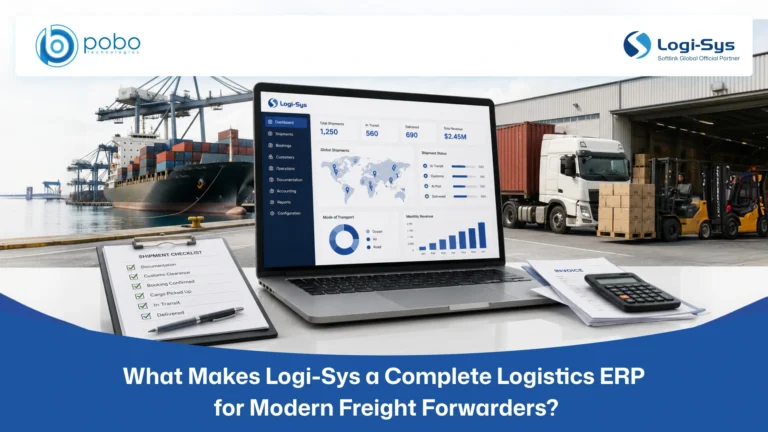
Logi-Sys ERP brings essential logistics operations together through specialized modules designed for freight forwarders, customs brokers, warehouse operators, and logistics service providers. Rather than relying on multiple standalone applications, businesses can manage different operational and financial functions through one integrated platform.
What is Logi-Sys ERP?
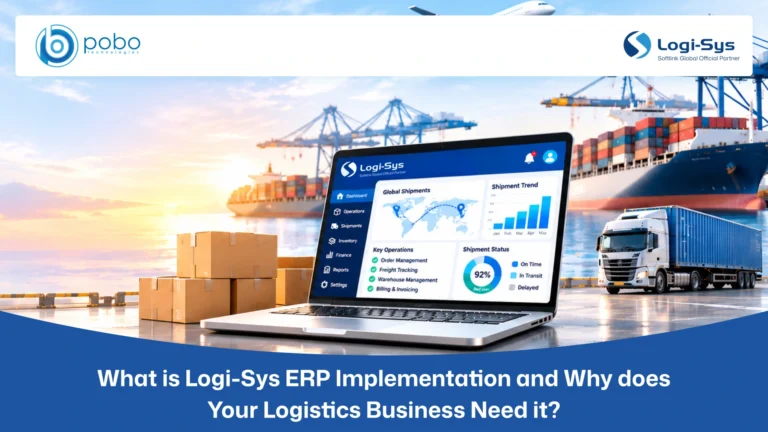
Logi-Sys is a cloud-based ERP platform developed for the logistics and freight forwarding industry. It supports businesses involved in air freight, ocean freight, transportation, customs clearance, warehousing, and related logistics services.
What makes the platform relevant to logistics companies is its industry-focused approach. Instead of treating freight operations and financial management as separate activities, Logi-Sys connects these business functions within a unified environment.
Its modular structure also gives businesses flexibility to select solutions based on their operational requirements, business size, and service offerings.
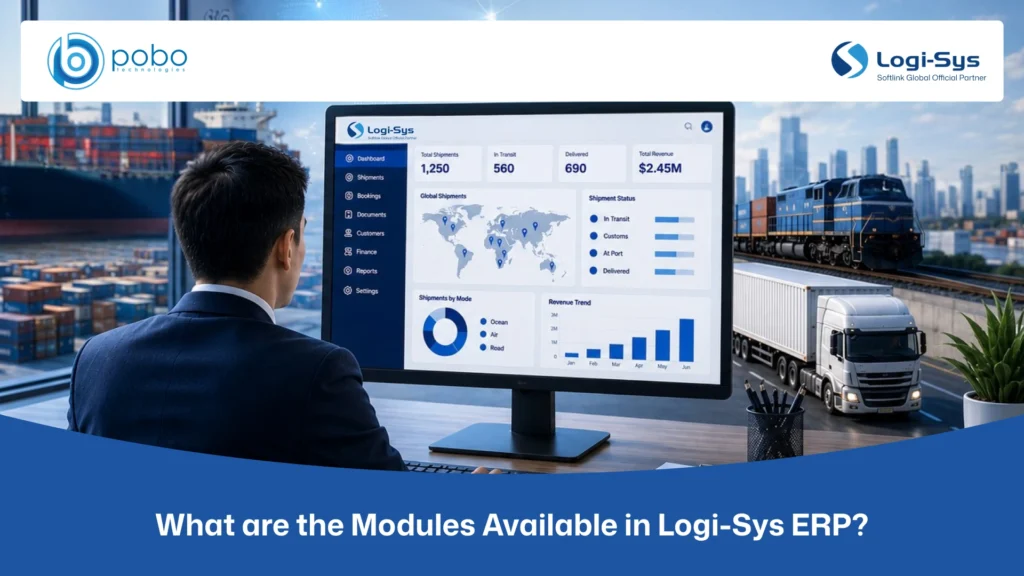
What are the Core Modules Available in Logi-Sys ERP?
Logi-Sys offers a range of specialized modules covering the major functions of a logistics business.
Freight Forwarding Module
Freight forwarding involves coordinating shipments, managing transportation arrangements, preparing documents, and maintaining communication with customers and service providers. Handling these activities across different systems can make shipment visibility and operational coordination difficult.
The Logi-Sys Freight Forwarding Module supports inbound and outbound operations across air and sea freight. Its capabilities include shipment bookings, air waybills, house air waybills, bills of lading, house bills of lading, consolidation management, vessel and container tracking, and freight documentation.
It also supports manifest filing requirements across multiple countries and provides operational reporting to help businesses monitor shipment activities.
For freight forwarding companies managing domestic and international shipments, this module provides a more connected environment for coordinating daily freight operations.
Invoicing Module
Billing accuracy directly affects a logistics company’s revenue and cash flow. Freight forwarders often deal with different charge types, customer-specific billing requirements, multiple currencies, and country-specific tax regulations.
The Logi-Sys Invoicing Module supports billing across freight forwarding, customs brokerage, transportation, and warehousing operations. It includes multiple invoice types, multi-currency billing, debit notes, credit notes, and operational invoice posting.
It also supports country-specific e-invoicing requirements and customized invoice formats. With billing information for operational activities, businesses can improve visibility into invoiced and unbilled transactions.
Financial Accounting Module
Financial management is about more than recording income and expenses. Logistics businesses need to understand shipment profitability, outstanding receivables, vendor payments, operating costs, and branch-level financial performance.
The Logi-Sys Financial Accounting Module supports accounts payable, accounts receivable, bank management, multi-currency accounting, financial reconciliation, and reporting.
It also provides shipment-level visibility into profitability, helping businesses understand revenue, costs, and margins across customers, services, and branches. These capabilities support better financial oversight and more informed business decisions.
Sales and CRM Module
Customer relationships are a major part of business growth in logistics. Managing inquiries, quotations, sales opportunities, customer interactions, and follow-ups can become challenging when information is scattered across different platforms.
The Logi-Sys Sales and CRM Module is designed to support the sales and customer service requirements of logistics businesses.
It includes lead and opportunity management, inquiry and quotation management, tariff and rate management, sales activity tracking, customer interaction records, and performance reporting.
By bringing customer and sales information into a more organized environment, logistics teams can improve follow-up coordination, understand sales performance, and manage customer relationships more effectively.
Customs Compliance Module
Customs documentation and regulatory requirements are important considerations in international freight movements. Missing information, incorrect declarations, or compliance issues can affect shipment schedules, delay cargo clearance, and increase operational costs.
The Logi-Sys Customs Compliance Module supports customs-related activities and documentation requirements. In India, it supports manual and online Bills of Entry (BE) and Shipping Bills (SB), ICEGATE filing, and e-Sanchit electronic documentation. Its US customs capabilities include Automated Export System (AES) integration, Ocean AMS cargo declarations, ISF 10+2 filings, denied party screening, known shipper management, and ABI/ACE integration.
Businesses can also integrate Logi-Sys with compatible customs systems, government platforms, and third-party applications, depending on country-specific regulatory requirements and available integration capabilities.
For logistics companies operating across multiple countries, integrating external customs systems with Logi-Sys helps connect customs and freight forwarding workflows, reduce repetitive data entry, improve information exchange, and provide better visibility across international operations.
Transportation Management Module
Transportation plays an important role in moving cargo between ports, warehouses, distribution centers, and customer locations. Managing vehicle movements, delivery schedules, transportation costs, and related activities requires proper coordination.
The Logi-Sys Transportation Management Module supports transportation-related operations within the logistics business environment.
It helps businesses manage transportation activities and maintain better visibility into operational movements and associated expenses. When connected with freight forwarding and warehouse operations, transportation management can support smoother coordination across different stages of cargo movement.
Warehouse Management Module
Warehouse operations involve several activities, from receiving goods and managing inventory to storage, repacking, and dispatch. Without proper visibility, managing these activities across multiple locations can become complicated.
The Logi-Sys Warehouse Management Module supports single- and multi-warehouse operations, inventory management, stock receipts, storage allocation, and goods repacking.
It also supports barcode and QR code scanning, customer visibility, and integration with transportation and freight forwarding modules. These capabilities help logistics businesses maintain better inventory visibility and coordinate warehouse activities with their wider operations.
Purchase Order Management Module
Purchase order management is important for logistics businesses that coordinate with multiple vendors, suppliers, and service providers. Keeping track of purchase orders, shipment associations, and delivery schedules can be challenging without a centralized system.
The Logi-Sys Purchase Order Management Module supports purchase order creation, tracking, and shipment association. It also provides visibility into order status and supports information sharing across relevant modules.
This helps businesses organize procurement-related activities, maintain better coordination with stakeholders, and track purchase orders alongside their logistics operations.
CFS and AFS Module
Container Freight Stations (CFS) and Air Freight Stations (AFS) handle specialized cargo activities that require coordination between storage facilities, customs, transportation providers, and other stakeholders.
The Logi-Sys CFS and AFS Module supports cargo handling, loading and unloading, consolidation, deconsolidation, and storage activities.
It also supports customs documentation, value-added services such as repacking and quality checks, and operational expense and revenue tracking. For businesses managing air and container freight stations, these capabilities help bring greater visibility and control to cargo handling activities.
Can Logi-Sys ERP Be Customized and Integrated to Match Your Business Operations?
Every logistics business has its own way of managing operations. A freight forwarder, customs broker, or warehouse operator may use different workflows and business applications. Logi-Sys ERP can be customized and configured to suit these specific requirements. Its modules can be adjusted to match existing workflows, while integrations can connect the platform with other business applications, customs systems, and third-party tools.
From customizing reports and modifying existing features to connecting external applications, businesses can explore options that make Logi-Sys work better with their operations. The right solution depends on your business needs, existing systems, and technical requirements.
How do You Choose the Right Logi-Sys ERP Modules for Your Business?
Not every logistics company has the same operational requirements. A freight forwarder handling international air and ocean shipments may prioritize freight forwarding, invoicing, and financial accounting.
A 3PL provider may place greater importance on warehouse and transportation management. Similarly, customs brokers may need specialized customs compliance capabilities, while companies operating CFS or AFS facilities may require dedicated cargo management support.
Before selecting modules, consider your current business operations, existing systems, reporting requirements, customer expectations, and future expansion plans.
The right module combination should support your actual business needs rather than adding unnecessary complexity.
Why do Logistics Businesses Need the Right Logi-Sys Implementation Partner?
Selecting the right ERP modules is only one part of the process. Businesses also need to consider implementation, configuration, customization, integration, employee adoption, and ongoing technical support.
A logistics ERP system must align with the company’s operational requirements. Incorrect configurations or an incomplete understanding of existing workflows can make even a capable ERP platform difficult to use.
Working with a trusted Logi-Sys service partner helps businesses get the right guidance throughout their ERP journey. From understanding business requirements to configuring relevant modules and supporting users, the right implementation expertise can make a meaningful difference.
Final Thoughts
Logi-Sys ERP offers specialized modules for freight forwarding, invoicing, financial accounting, sales and CRM, customs compliance, transportation, warehouse management, purchase orders, and CFS and AFS operations.
Choosing the right modules and aligning them with your business processes can help create an ERP environment that supports your daily operations and future growth.
POBO Technologies, your Logi-Sys service partner, provides implementation, customization, configuration, integration, and ongoing support to help you get the most out of your ERP system.
Planning to implement or enhance Logi-Sys ERP? Schedule a free consultation with our team to discuss your business requirements.