Freight profitability is rarely determined by one large transaction. It is shaped by dozens of smaller financial details: a surcharge added during transit, an exchange-rate difference, an overlooked customer charge, or a vendor cost posted to the wrong job.
When these details are spread across operational systems, spreadsheets, and accounting tools, finance teams may discover the real margin only after the shipment is closed. By then, recovering missed revenue or correcting inaccurate reports becomes much harder.
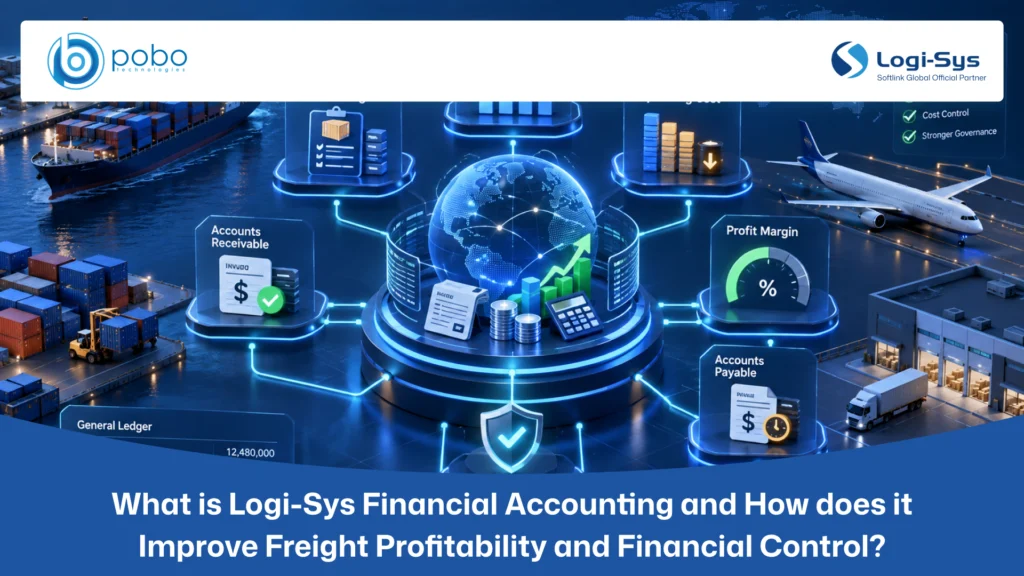
Logi-Sys Financial Accounting connects operational and financial information within one logistics-focused ERP environment. It gives freight and logistics companies better visibility into revenue, costs, cash flow, outstanding balances, and job profitability.
What is Logi-Sys Financial Accounting?
Logi-Sys Financial Accounting is an integrated accounting module built for freight forwarding and logistics businesses. It connects each financial entry to the shipment, job, customer, branch, charge, currency, and operational event that generated it.
The module supports accounts receivable and payable, bank and cash management, multi-company and multi-branch accounting, multi-currency transactions, work in progress, accruals, revenue recognition, credit control, reconciliation, approval workflows, period locks, audit trails, and financial reporting.
Unlike a disconnected accounting application, Logi-Sys keeps finance linked with operational activity. This reduces repeated data entry and gives finance teams more context when reviewing invoices, expenses, outstanding payments, or profitability.
How does Logi-Sys Improve Financial Control and Freight Profitability?
Logi-Sys strengthens financial control by connecting the commercial result of a shipment with the operational activities behind it. Instead of waiting until month-end to understand performance, authorized teams can monitor financial information as the job progresses.
Connecting Operational Data with Financial Records
Financial accuracy begins before a customer invoice is created. It starts when operational teams record the services performed, charges applied, and expenses expected against a freight job.
A single shipment may involve freight charges, customs services, transportation, warehousing, documentation, handling, overseas agent fees, and taxes. These activities may be completed by different teams at different stages.
If an operational service is not recorded, billing may miss a customer charge. If an expected supplier cost is not captured, the shipment may temporarily appear more profitable than it really is.
Logi-Sys supports direct financial postings from operations, allowing relevant transactions to move into the accounting workflow without being manually recreated in another system. Finance must still verify entries and follow the required approvals, but the financial review begins with information connected to the original job.
Measuring Profitability at the Shipment Level
A profitable month does not mean every shipment made money. One job may generate a strong margin, while another may lose money because of an incorrect selling rate, missed customer charge, currency difference, unexpected vendor expense, or operational exception.
Logi-Sys allows businesses to review revenue, costs, margins, and profitability at the shipment level. Performance can also be analyzed by customer, branch, mode, service, or trade lane.
Finance teams can compare expected revenue and costs with the final amounts recorded against the job. If the margin falls below expectations, management can examine the transactions that affected the result.
This visibility supports better pricing decisions, customer-account reviews, vendor negotiations, and cost control. It also helps management identify profitable services and recurring sources of margin leakage.
Managing Work in Progress and Accrued Costs
Freight revenue and costs do not always enter the accounts during the same financial period.
For example, an ocean shipment may be completed before the shipping line or overseas agent submits its final invoice. The customer may already have been billed, while an important supplier expense remains unrecorded.
If finance closes the month without accounting for that expected expense, the shipment and the overall business may show an overstated profit.
Logi-Sys supports work-in-progress and accrual tracking, giving finance visibility into revenue and expenses that have not yet been fully billed or recorded. The team can accrue an estimated supplier cost and compare it with the actual invoice when it arrives.
This provides a more realistic view of financial performance and helps users investigate significant differences between expected and final costs.
Recognizing Revenue Based on Operational Milestones
Revenue should not necessarily be recognized just because a quotation or invoice exists. Depending on the company’s policies, revenue recognition may be linked to a shipment milestone, service completion, or another approved business rule.
Because Logi-Sys connects finance with freight operations, revenue recognition can be aligned with relevant operational progress. Finance can distinguish between revenue that has been quoted, billed, earned, or remains pending recognition.
The exact process must be configured according to the company’s accounting policies and applicable regulatory requirements. Logi-Sys supports the workflow, while finance remains responsible for defining, reviewing, and approving the correct treatment.
Strengthening Receivables and Credit Control
Recording revenue does not improve cash flow until the customer pays.
Freight forwarders may continue serving customers even when previous invoices are overdue or approved credit limits have been exceeded. Without timely visibility, outstanding balances can grow and increase financial risk.
Logi-Sys supports receivables monitoring, aging analysis, customer credit limits, outstanding-balance visibility, and collection tracking. Finance teams can identify which invoices are due, how long they have remained unpaid, and which customers require follow-up.
Because each receivable remains connected to the customer and underlying freight transaction, teams have better context when investigating disputes or delayed payments. This helps businesses prioritize collections and manage customer credit exposure more effectively.
Controlling Payables and Supplier Costs
Freight forwarders work with airlines, shipping lines, overseas agents, transporters, warehouses, customs service providers, and other vendors. Every supplier invoice must be allocated to the correct job and checked against the service received.
An expense assigned to the wrong shipment can distort vendor balances and job profitability.
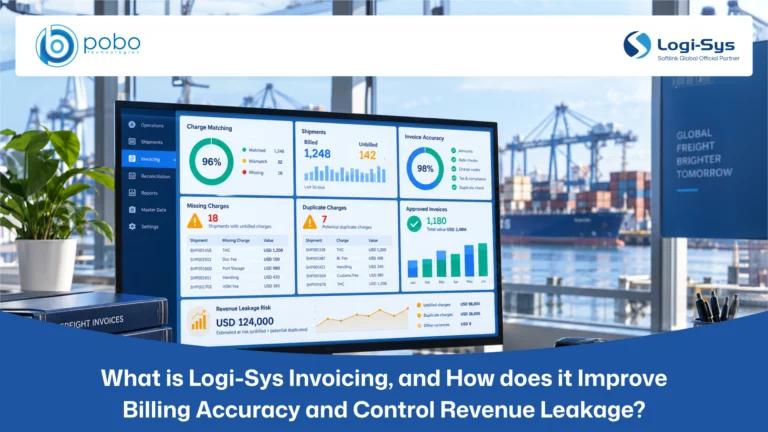
Logi-Sys connects accounts payable with the relevant operational activity. Finance teams can compare supplier invoices with expected costs and identify incorrect allocations, duplicate charges, or differences between agreed and invoiced amounts before payment.
This improves payable accuracy while protecting the reliability of shipment-level margin reporting.
Managing Multi-Branch and Multi-Currency Accounting
Logistics companies frequently operate through multiple branches, legal entities, departments, and currencies. Each location may manage its own shipments and transactions, while leadership still requires consolidated financial visibility.
Logi-Sys supports multi-company, multi-branch, and multi-currency accounting with centralized control and consolidated reporting. Management can review performance by branch, department, customer, service, or currency.
Successful use depends on accurate configuration. Exchange-rate policies, tax settings, account structures, inter-branch processes, and reporting hierarchies must reflect the organization’s actual operating model.
Improving Reconciliation, Approvals, and Auditability
Financial accuracy also depends on how transactions are reviewed and controlled after posting.
Logi-Sys supports bank and cash management, reconciliation, approval workflows, financial-period locks, and audit trails. Approval workflows help control sensitive transactions and adjustments, while period locks protect completed accounting periods from unauthorized backdated changes.
Audit trails help teams identify who created, changed, reviewed, or approved an entry. These controls improve accountability and make financial records easier to examine during month-end closing, internal reviews, and audits.
Configuring Logi-Sys Around Financial Workflows
Technology alone cannot guarantee accurate freight accounting. Logi-Sys must be configured around the company’s operational and financial processes.
Businesses should define their charge codes, cost categories, tax rules, credit limits, approval levels, accrual procedures, revenue-recognition policies, and job-closing requirements. Customer, supplier, currency, and branch master data must also remain accurate.
Role-based training is equally important. Operations teams should understand how their entries affect billing and profitability, while finance teams should understand the operational events behind each financial transaction.
Conclusion
Logi-Sys Financial Accounting connects freight operations with the financial results they produce. It helps logistics companies control receivables and payables, manage WIP and accruals, recognize revenue appropriately, monitor credit exposure, and evaluate profitability at the shipment level.
However, getting reliable financial results from Logi-Sys requires more than activating the module. The workflows, account structures, approval rules, and reports must reflect how your logistics business actually operates. As an authorized Softlink Global service partner, POBO Technologies provides the practical expertise needed to align Logi-Sys Financial Accounting with your business.
Ready to improve financial control and gain a clearer view of freight profitability? Schedule a consultation with POBO Technologies.