

Why do I Need a Logi-Sys Service Partner?
As technology continues to shape logistics and supply chain management, many businesses are turning to advanced software solutions that suit…
Veera • 6 min read
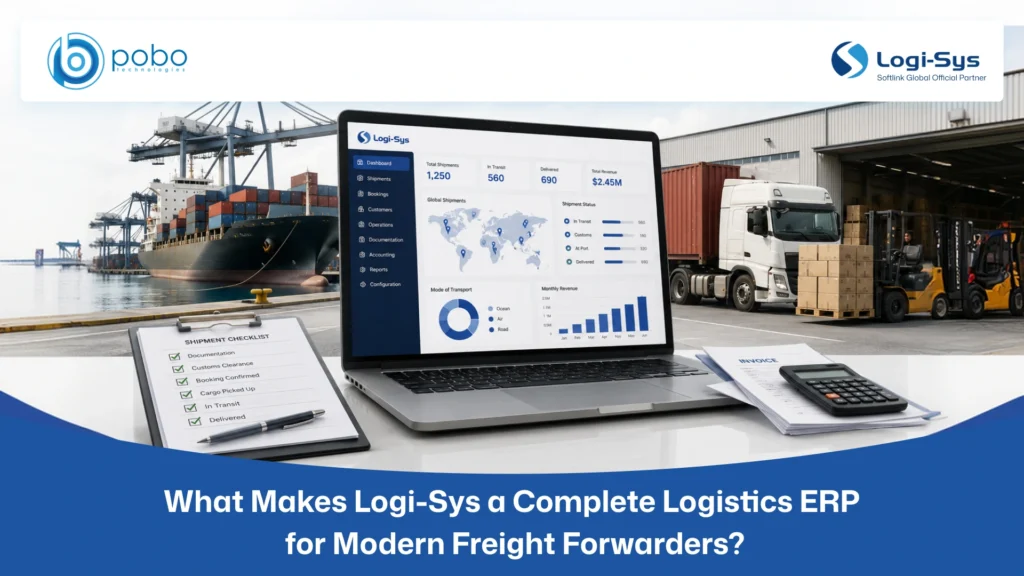
Logi-Sys is a cloud-based logistics ERP developed by Softlink Global to bring freight forwarding, customs-related operations, transportation, warehousing, sales, customer visibility, invoicing, and financial accounting together in one platform.
Designed for freight forwarders, NVOCCs, consolidators, customs brokers, transport companies, warehouse operators, and other logistics service providers, the platform helps businesses coordinate workflows and manage information across departments. According to its official Softlink Global website, Logi-Sys serves more than 5,000 freight forwarding businesses across 50+ countries and has over one million users.
Its centralized database helps maintain consistent information across operational and financial functions, reducing duplicate data entry and improving information flow. The cloud-based architecture eliminates the need for businesses to maintain their own application servers, while its modular design allows them to select the capabilities that suit their requirements and expand as their operations grow. Built-in approval workflows and scheduled alerts further support process control, task management, and timely follow-ups.
A freight job involves several teams. Sales confirms the customer requirement, operations manages the shipment, documentation prepares the AWB or Bill of Lading, customs handles clearance, and finance controls billing and costs.
When these teams use separate applications, shipment information is copied between systems. This increases the risk of incorrect rates, inconsistent documents, missed customer charges, and delayed reporting.
Logi-Sys connects these functions through a shared database. Customer, carrier, shipment, document, rate, and charge information can flow between relevant modules based on user roles and business processes.
The platform is cloud-based, reducing the need to maintain local application servers. Its modular structure also allows logistics companies to configure the capabilities required for their current operations and introduce additional modules as the business grows.
The Logi-Sys Freight Forwarding module supports inbound and outbound air and ocean freight.
For air freight, the platform provides capabilities for:
For ocean freight, it supports:
Shipment milestones, documents, rates, and applicable charges remain connected to the operational job. This gives documentation, customer service, billing, and management teams access to more consistent information.
Logi-Sys also supports air and ocean manifest submissions using declaration formats for multiple countries. Freight forwarders should confirm whether the required country, declaration format, and customs connection are available for their trade lanes during the implementation assessment.
Logi-Sys provides customs capabilities for India and the United States.
For India, the platform supports Bills of Entry, Shipping Bills, customs shipment registration, duty and tax calculations, ICEGATE communication, and E-Sanchit documentation.
Its US customs capabilities include AMS, AES, and ISF workflows.
For customs processes in other countries, freight forwarders may connect Logi-Sys with compatible third-party customs platforms through APIs, EDI, or other supported integration methods. These integrations require technical assessment, data mapping, configuration, testing, and ongoing monitoring.
A qualified Logi-Sys service partner can assess the customs platform, confirm integration feasibility, map the required information, and test the complete data flow. Availability depends on local regulations, third-party system capabilities, and technical compatibility.
Freight operations frequently extend beyond the port or airport. Forwarders may also arrange cargo pickup, container movement, storage, handling, and final delivery.
The Transportation Management module supports trip and route planning, driver and vehicle allocation, container-leg management, shipment tracking, transport costs, delivery updates, and electronic proof of delivery.
The Warehouse Management module covers:
Logi-Sys also provides Purchase Order Management for businesses handling shipments against customer purchase orders. Users can connect POs with shipments, monitor ordered and shipped quantities, and track outstanding balances.
Its Freight Station module supports CFS and AFS activities, including cargo receipt, loading, unloading, consolidation, deconsolidation, storage, customs documentation, repacking, and cargo release.
Checking rates, reviewing schedules, making bookings, submitting instructions, and tracking shipments across several carrier portals can consume considerable operational time.
LogiCONNECT brings many of these carrier activities into the Logi-Sys environment. According to official product information, it provides:
LogiCONNECT also supports carbon-emission tracking, helping forwarders respond to customers requesting environmental information about their shipments.
Carrier and service availability may vary by transport mode, location, trade lane, and commercial agreement. Companies should verify the specific connections required for their operations before implementation.
Customers expect direct access to shipment information rather than depending entirely on emails and phone calls.
LogiTRACK provides authorized customers with access to live shipment status, milestone and ETA updates, documents, invoices, and customs information. Freight forwarders can provide a branded portal experience that reflects their own identity.
This self-service visibility can reduce routine status requests and give customer-service teams more time to manage shipment exceptions.
However, a portal is only as reliable as the information behind it. Businesses must define clear responsibility for recording milestones and keeping shipment data current.
A shipment is not commercially complete until every customer charge and supplier cost has been recorded.
Logi-Sys Invoicing connects billing with freight forwarding, customs, transportation, and warehouse activities. It supports multiple invoice types, multi-currency billing, debit and credit notes, configurable invoice formats, tax requirements, billing registers, and unbilled-job reporting.
The Logi-Sys Financial Accounting module connects financial transactions with the jobs and operational activities that generated them.
It supports receivables, payables, WIP and accrual tracking, revenue recognition, credit control, bank and cash management, reconciliation, approval workflows, period locks, and audit trails.
Management can review revenue, costs, margins, and profitability by shipment, customer, service, branch, mode, or trade lane. This helps teams identify missed charges, unexpected supplier costs, overdue customer balances, and jobs performing below their expected margin.
The Sales and CRM module supports leads, inquiries, opportunities, tariffs, quotations, customer interactions, campaigns, follow-ups, and sales-performance reporting.
When a quotation is accepted, relevant commercial information can move into the operational workflow. This creates a clearer connection between what sales offers and what operations must deliver.
LogiLENS adds AI-assisted document processing. It can capture logistics documents, extract relevant information, validate the data, and transfer structured details into operations, customs, and billing workflows. Human review remains important when document quality, compliance risk, or commercial value requires verification.
LogiBRAIN converts operational and financial data into dashboards, KPIs, predictive analytics, and management insights. Users can analyze shipment volumes, branch performance, customer results, trade lanes, revenue, and profitability.
Together, these capabilities make Logi-Sys ERP more than a shipment-processing application.
Logi-Sys provides broad capabilities, but software features alone cannot improve a freight business. The platform must be configured around the company’s services, branches, documents, approval rules, billing methods, accounting structure, integrations, and reporting requirements.
As Softlink Global’s trusted partner for Logi-Sys, we help freight and logistics companies with:
Our structured approach helps businesses select the appropriate modules, prepare reliable data, test complete workflows, and equip users before the system goes live.
Logi-Sys is a complete logistics ERP because it connects freight forwarding, customs, transportation, warehousing, purchase orders, freight stations, customer visibility, billing, accounting, CRM, analytics, and document automation.
Its value comes from maintaining connected information throughout the shipment lifecycle, from customer inquiry and quotation to delivery, invoicing, and financial closure.
Planning to implement, migrate to, or optimize Logi-Sys ERP? Book a free consultation with us to discuss the modules, integrations, and workflows that fit your logistics business.
As technology continues to shape logistics and supply chain management, many businesses are turning to advanced software solutions that suit…
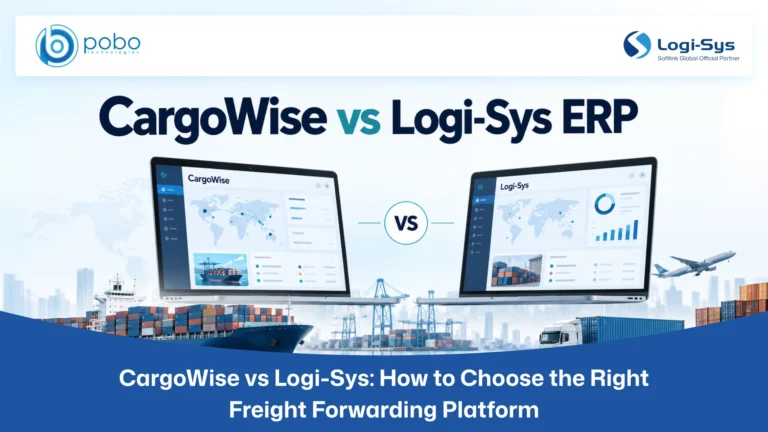
CargoWise and Logi-Sys are established logistics platforms that connect freight operations with customs, transportation, warehousing, billing, accounting, and reporting. However,…
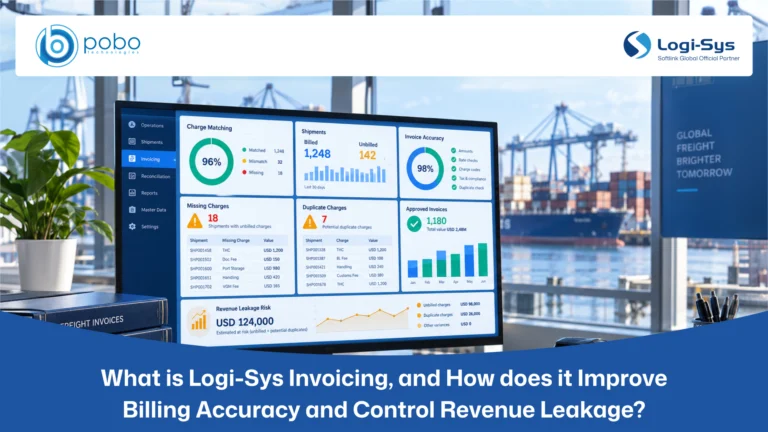
Freight jobs may include air or ocean freight, documentation, customs clearance, transportation, storage, handling, and destination services. If one charge…